Spitfire Association Logo

FLGOFF Robert Keith Hollow 408843

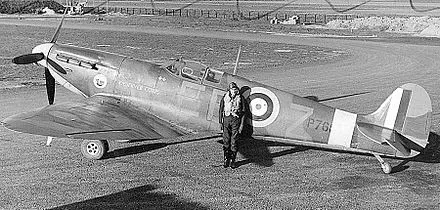
Sqn Ldr Donald O. Finlay, OC 41 Squadron, standing with Spitfire IIa, P7666, EB-Z, which was his personal mount. He claimed a destroyed Me109 on his first sortie on the day the aircraft was delivered, 23 November 1940.
Squadron/s41 SQN RAF
79 SQN
Rank On Discharge/Death Flying Officer (FLGOFF)
NicknameBob
Mustering / SpecialisationPilot
Date of Birth10 Feb 1914
Contributing Author/sVince Conant
2017
The Spitfire Association

Flying Officer Robert Keith "Bob" Hollow was born on 10 February 1914 in Rutherglen, Victoria. He enlisted in Melbourne and served as a fighter pilot with the Royal Air Force and the Royal Australian Air Force during the Second World War.

Hollow was posted to No. 41 Squadron RAF, one of the most distinguished Spitfire squadrons of the war. The squadron had participated in the evacuation of Dunkirk, fought throughout the Battle of Britain, and later joined the Tangmere Wing under Wing Commander Douglas Bader for offensive operations over France.

Hollow later transferred to No. 79 Squadron RAAF, the first RAAF Spitfire squadron to serve in the South-West Pacific theatre. With 79 Squadron, he served at Goodenough Island in the D'Entrecasteaux Islands, Papua, during 1943, operating Spitfires from Vivigani airfield alongside No. 76 Squadron under often adverse conditions.
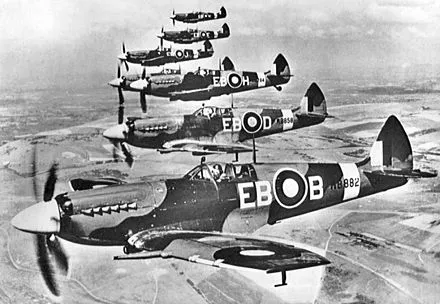
41 Squadron Spitfire XIIs in an Air Ministry photograph dated 12 April 1944. Flight Commander Flt Lt Don Smith RAAF is flying the aircraft in the foreground.

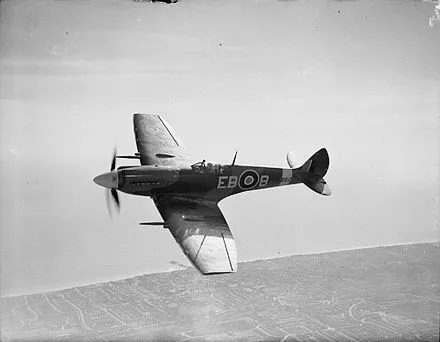
Spitfire XII, MB882, EB-B, 12 April 1944. This aircraft was the personal mount of two consecutive Flight Commanders, Flt Lt Don Smith RAAF and Flt Lt Terry Spencer.

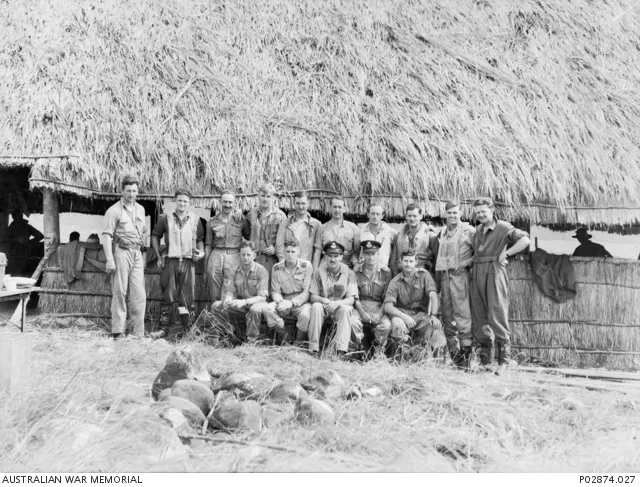
Goodenough Island, D'Entrecasteaux Islands, Papua. July 1943. Group portrait of pilots of B Flight, No. 79 (Spitfire) Squadron RAAF, with the CO and Wing Leader of No. 73 Wing, at Vivigani airfield. Flying Officer R.K. (Bob) Hollow is in the back row, third from the left.

Learn more about the squadron/s in which Robert served.

We do our very best to make sure the information in the stories we share is correct. These stories are maintained to show our respect for the pilots, ground crew, design engineers and all who were involved with the Spitfire. In many cases, the information has been collected from the personal interactions between our members and the pilots and crew featured, and on many occasions, this process happened much later in the veterans' lives. If you believe anything on our site is not historically accurate, we welcome the additional stories, records and photos needed to help us correct the record. We thank you for your understanding.