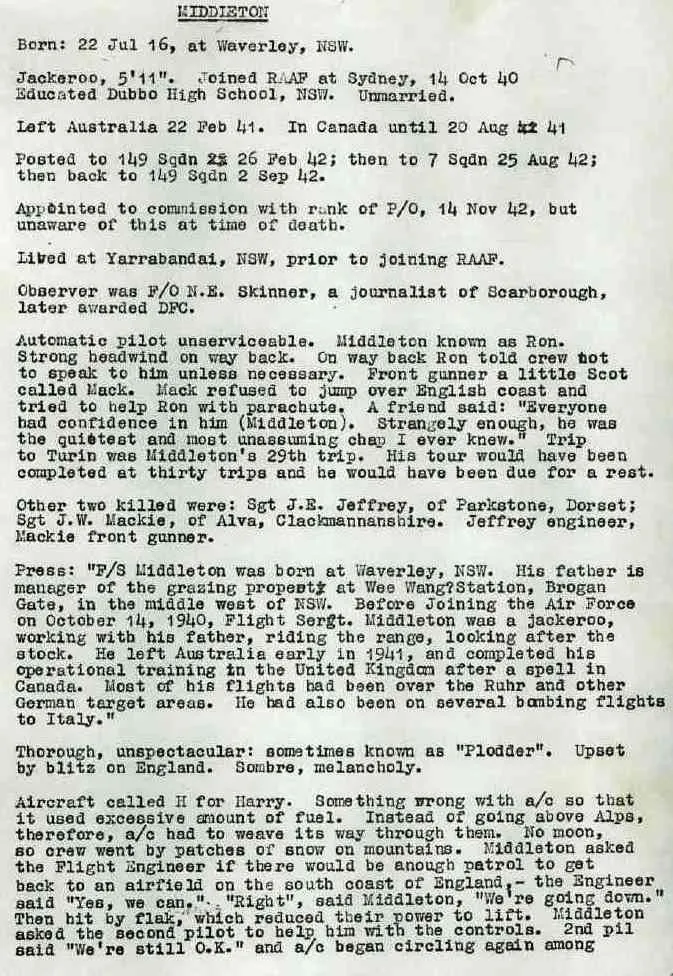
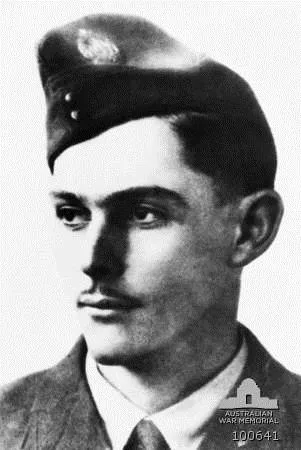
Pilot Officer Rawdon Hume Middleton VC was born on 22 July 1916 at Waverley, New South Wales. A great-nephew of the explorer Hamilton Hume, he grew up in the Dubbo district and worked as a jackeroo in western New South Wales before enlisting in the Royal Australian Air Force on 14 October 1940 under the Empire Air Training Scheme.
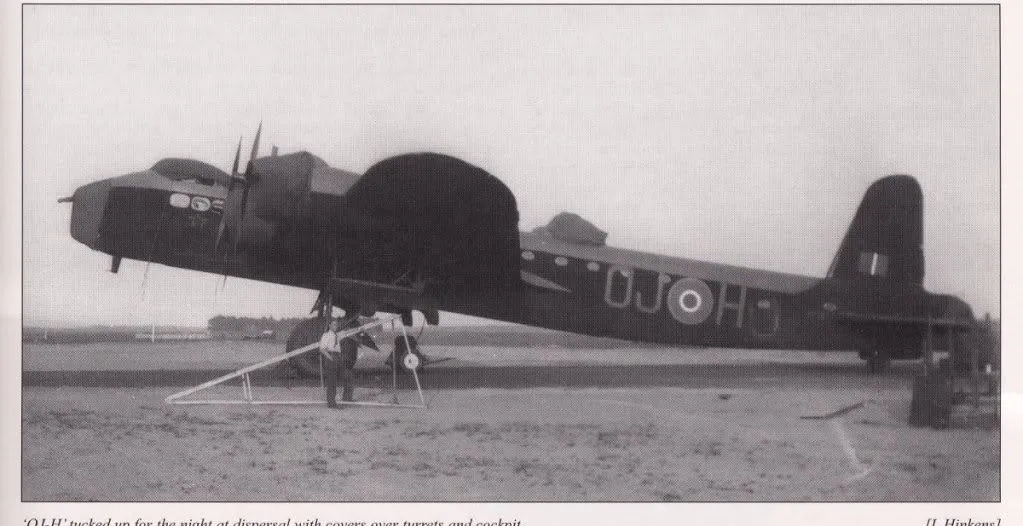
Middleton trained at Narromine, NSW, before receiving further instruction in Canada. He arrived in Britain in September 1941 and was promoted to Flight Sergeant in December. In February 1942 he was posted to No. 149 Squadron RAF, flying Short Stirling heavy bombers. He progressed from second pilot to first pilot and captain by July, flying his inaugural operation as captain on 31 July 1942 against Düsseldorf.
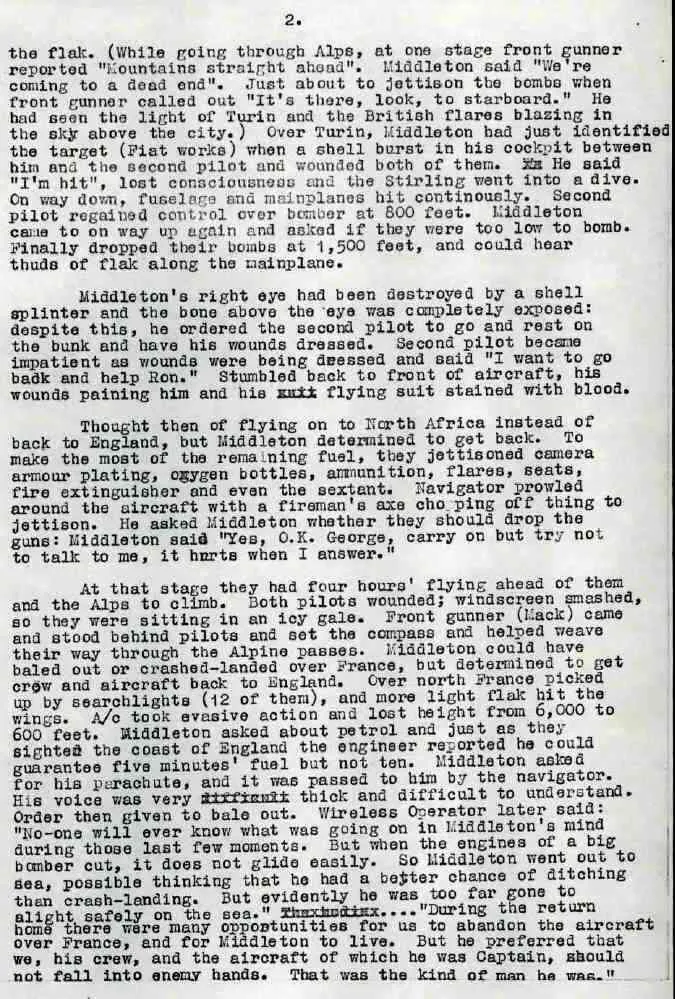
On the night of 28 November 1942, Flight Sergeant Middleton captained a Stirling on a raid against the Fiat works at Turin, Italy. It was his twenty-ninth operational sortie. On the approach to the target the aircraft sustained heavy flak damage. A shell burst in the cockpit, destroying Middleton's right eye and inflicting severe facial wounds. He was also wounded in the body and legs.
Despite his injuries, Middleton maintained control of the aircraft and made three runs over the target before the bombs were released. He then insisted on returning to England rather than diverting to North Africa or bailing out over occupied France, so that his crew would have the best chance of survival. For more than four hours he flew the damaged Stirling back across the Alps and France, in constant agony, barely able to see.
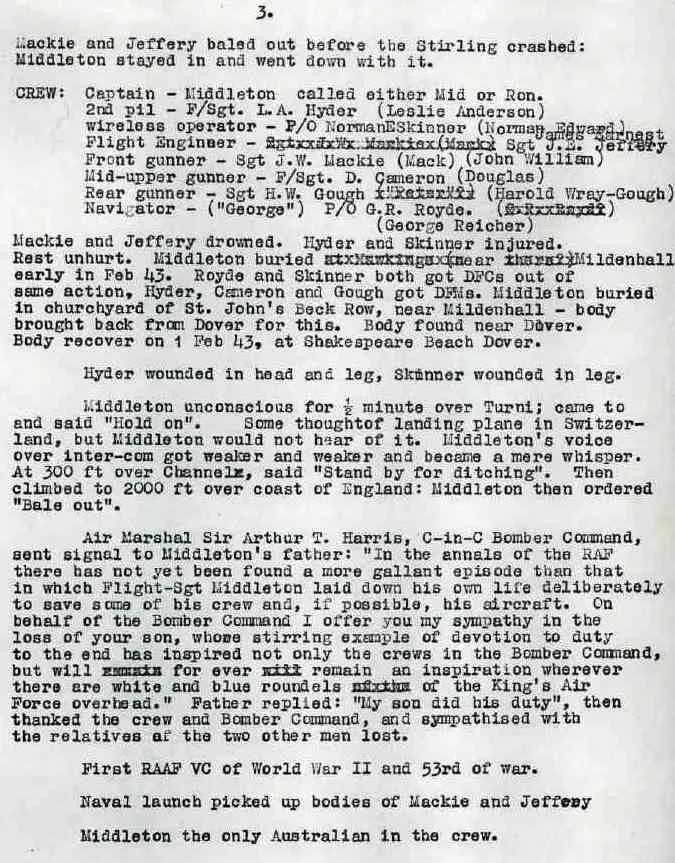
Near the English coast with minimal fuel remaining, Middleton ordered his crew to abandon the aircraft. Five crew members parachuted safely over land. He then turned back towards the English Channel to avoid crashing in a populated area. Two crew members who had remained to assist him parachuted into the sea and were drowned. Middleton, too weak to leave the aircraft, went down with the Stirling when it crashed into the Channel in the early hours of 29 November 1942.
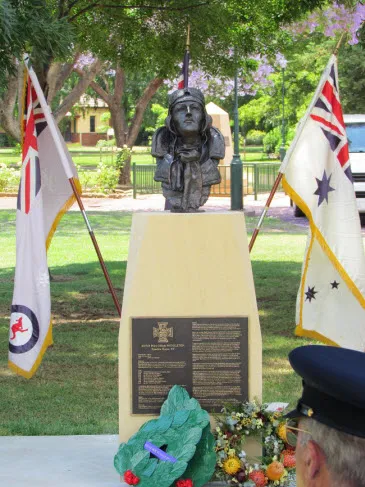
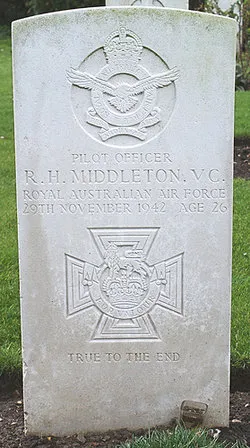
Middleton was posthumously awarded the Victoria Cross — the first awarded to a member of the RAAF in the Second World War. He was promoted to Pilot Officer with effect from 15 November 1942. His body was recovered at Shakespeare Beach, Dover, in February 1943 and he was buried with full military honours at St John's Churchyard, Beck Row, Suffolk. He was 26 years old.
In 1978, Middleton's Victoria Cross was presented to the Australian War Memorial, Canberra, where it remains on display.
Source: Australian War Memorial, collection record P10676514.