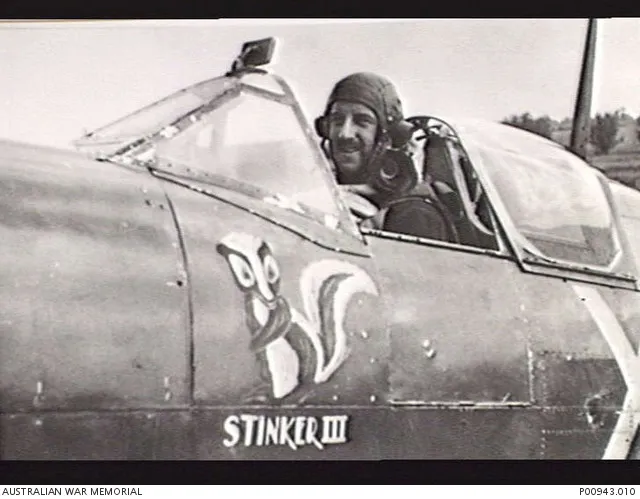
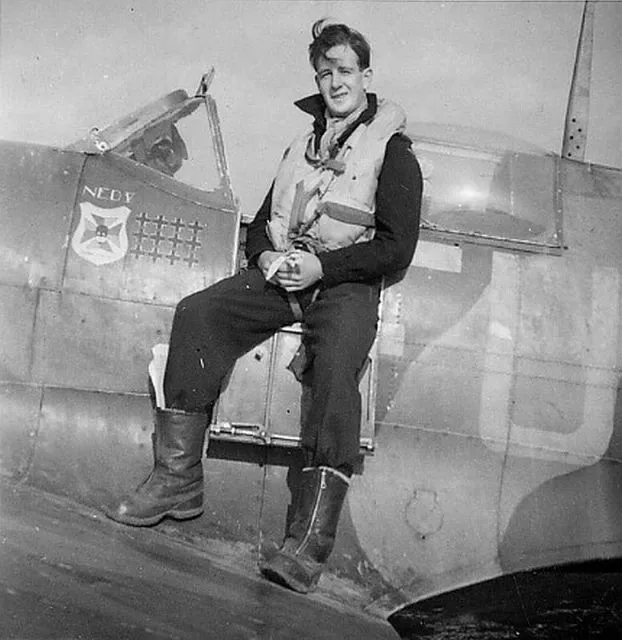
Jack "Slim" Yarra was born in Stanthorpe, Queensland, and went to Grafton High School in New South Wales before working as an apprentice printer for the Grafton Daily Examiner newspaper. He was 19 when he enlisted in the Royal Australian Air Force in October 1940.
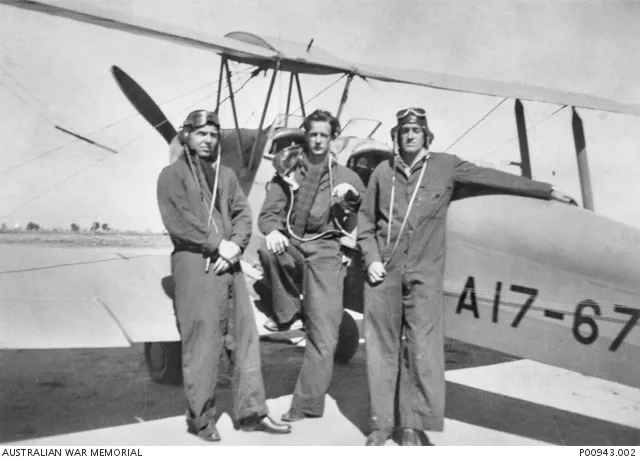
In November 1940, Jack and his friend Norman Rankin reported to Bradfield Park, Lindfield, to start their training. Jack was assigned to No. 7 Pilots Course. After completing initial training, they boarded the 'Awatea' on 22 April 1941, destination unknown. They eventually arrived in Vancouver and went over the Canadian Rockies by train, arriving in Yorkton, Saskatchewan, for training at No. 11 SFTS, flying North American Harvards. On 23 July 1941 they received their wings as Sergeant Pilots.
They left for England on the SS Maloja on 10 August 1941, arriving at the Operational Training Unit at Usworth on 6 September. Jack and Norman split up on 24 October — Norman was transferred to 56 Squadron (Typhoons) and Jack to No. 64 Squadron (Spitfires). Jack had applied to go to the Far East but was on leave when his posting came through, and another pilot took his place. When Jack came back from leave he took the replacement posting, which is how he ended up in Malta.
In January 1942, Yarra was promoted to Flight Sergeant and posted to No. 249 Squadron, RAF, destined for Malta. Malta was a vital British base in the Mediterranean. Between 1940 and 1943, the small island was subjected to a siege and bombing from Italian and German aircraft. In March 1942, Yarra was among the first Spitfire pilots who flew off the aircraft carrier HMS Eagle to reinforce the island's hard-pressed defenders. A few weeks later he was posted to No. 185 Squadron, RAF, flying Hawker Hurricanes and then Spitfires.
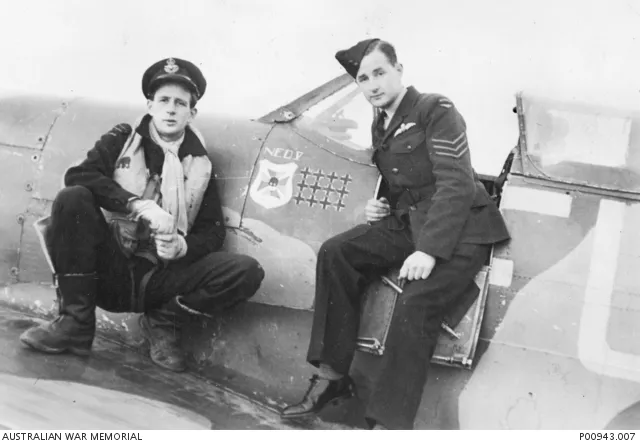
The air war over Malta was relentless; Yarra was often in the thick of the fighting. He claimed his first victory on the night of 1 May, the first of a series of victories. In just over three months, Yarra destroyed 12 enemy aircraft and damaged six others. In early June he was commissioned as Pilot Officer and a few days later was awarded the Distinguished Flying Medal.
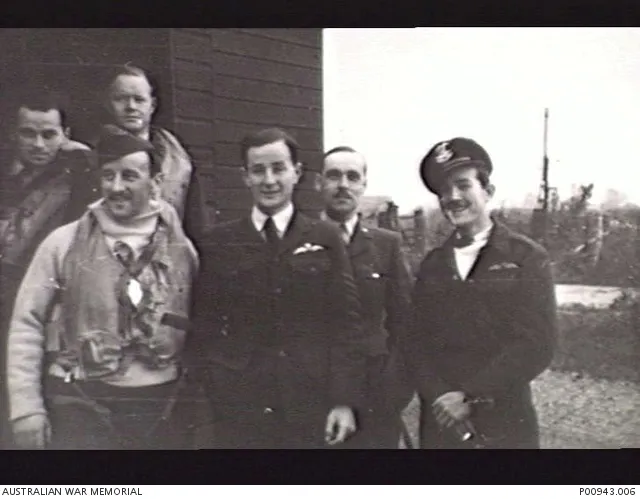
In mid-July, Yarra was posted back to Britain and joined No. 453 Squadron of the Royal Australian Air Force in September. He had "a fine reputation" and was one of the most experienced pilots in the squadron. His younger brother, Sergeant Robert Yarra, was also in the squadron. Their time together was brief.
On 10 December 1942, John Yarra was shot down and crashed into the sea off the coast of Holland while attacking a small convoy of German merchant vessels and a flak ship. His body was later recovered and washed ashore at Flushing. He was 21 years old.
In mid-1942, John Yarra wrote a letter to his mother, to be sent in the event of his death. It read: "I entered this war with the knowledge that I had a rather small chance of coming out of it alive. I was under no false impression I knew I had to kill and perhaps be killed. Since I commenced flying I have spent probably the happiest time of my life. Above all, Mother dear, I have proved to my satisfaction that I was at least, a man."
Pilot Officer Robert Ernest Yarra was also killed on operations on 14 April 1944 when his aircraft was shot down whilst attacking the flying bomb base near Abbeville, France.